
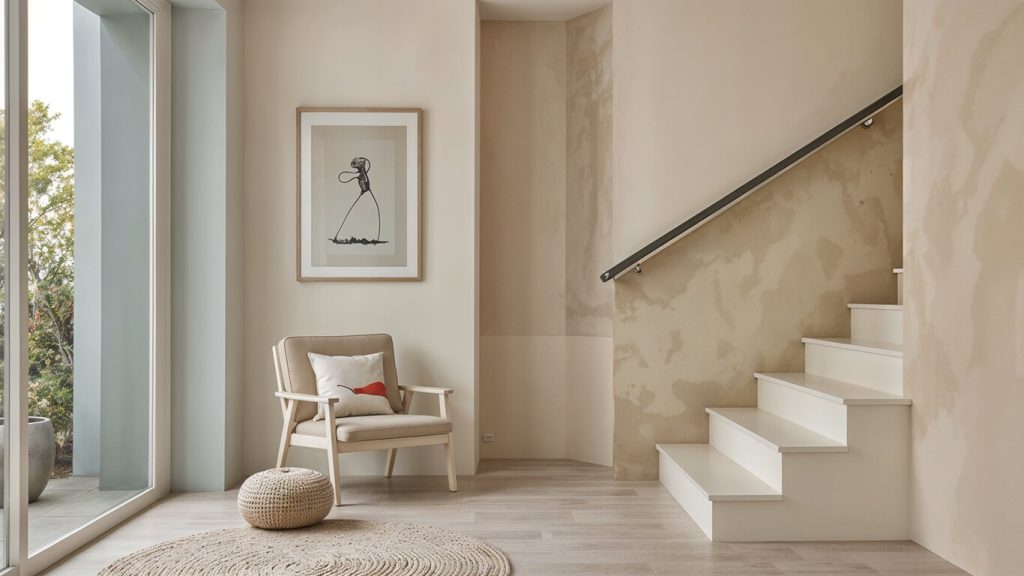
A well-planned color palette is the foundation of a cohesive interior. It connects rooms, sets the mood, and elevates the overall design from “nice” to intentional. Whether you’re refreshing a single space or designing an entire home, here’s a practical, designer-approved approach to building a color palette that feels balanced and timeless.
A cohesive color palette is not about following trends—it’s about creating balance, flow, and harmony that lasts. By layering neutrals, supporting tones, and thoughtful accents, you can design interiors that feel polished, comfortable, and uniquely yours.
1. Start With the Mood You Want
Before picking colors, decide how you want the space to feel. Calm and relaxing? Warm and inviting? Bold and energetic?
- Soft & serene: neutrals, muted blues, warm whites
- Warm & cozy: earthy tones, beiges, terracotta
- Modern & bold: high-contrast palettes, deep charcoals, jewel tones
Your emotional goal will guide every color decision that follows.
2. Choose a Base (Neutral) Color
Your base color anchors the space and typically appears on walls, large furniture, or flooring. Neutrals work best because they provide flexibility and longevity.
Popular base colors include:
- Warm whites and off-whites
- Soft greys and greige tones
- Beige, taupe, or sand shades
A strong neutral base allows accent colors to shine without overwhelming the room.
3. Add a Secondary Color for Depth
Your secondary color supports the base and adds visual interest. This shade often appears in upholstery, cabinetry, rugs, or feature walls.
Tips for choosing a secondary color:
- Stay within the same color temperature (warm or cool)
- Use a slightly deeper or richer tone than your base
- Ensure it complements existing materials like wood or stone
This layer creates harmony and avoids a flat, one-dimensional look.
4. Introduce Accent Colors Strategically
Accent colors bring personality and energy to a space. These should be used sparingly through accessories such as cushions, artwork, lighting, or décor pieces.
Effective accent color ideas:
- Deep blues, greens, or charcoal for sophistication
- Metallics like brass or bronze for warmth
- Muted pastels for subtle contrast
A good rule of thumb is the 60–30–10 rule:
- 60% base color
- 30% secondary color
- 10% accent color
This keeps the palette balanced and intentional.
5. Consider Natural Light and Space
Lighting dramatically affects how colors appear. Always test samples in the actual space and observe them throughout the day.
- North-facing rooms benefit from warmer tones
- South-facing rooms can handle cooler shades
- Small spaces feel larger with lighter palettes
- Large spaces can support deeper, richer colors
Designing with light in mind ensures your palette feels right at all times.
6. Create Flow Between Rooms
For a cohesive interior, colors should transition smoothly from one space to another. This doesn’t mean every room must be the same color—but they should relate.
Ways to create flow:
- Repeat accent colors in different rooms
- Use variations of the same neutral
- Keep a consistent undertone across spaces
This approach creates unity while still allowing each room its own identity.
7. Balance Color With Texture and Materials
Color works best when paired with texture. Natural materials like wood, stone, linen, and metal add depth and warmth, preventing the palette from feeling flat.
For example:
- Warm neutrals + oak wood = inviting and timeless
- Greys + marble + brass = refined and modern
- Earthy tones + natural textiles = organic and relaxed
Texture is just as important as color in achieving a cohesive look.
Final Thoughts
A cohesive color palette is not about following trends—it’s about creating balance, flow, and harmony that lasts. By layering neutrals, supporting tones, and thoughtful accents, you can design interiors that feel polished, comfortable, and uniquely yours.
At FIXARCH Studio, we carefully curate color palettes that align with architecture, lighting, materials, and lifestyle—ensuring every space feels intentional and beautifully connected.